
POCO Pad M1 vs Xiaomi Pad 8
Compare sourced specifications, release dates and prices. CoreInfo does not declare a universal winner.
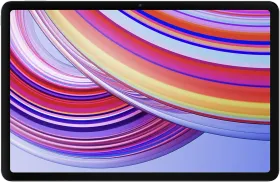 Xiaomi
POCO Pad M1
₹29,999
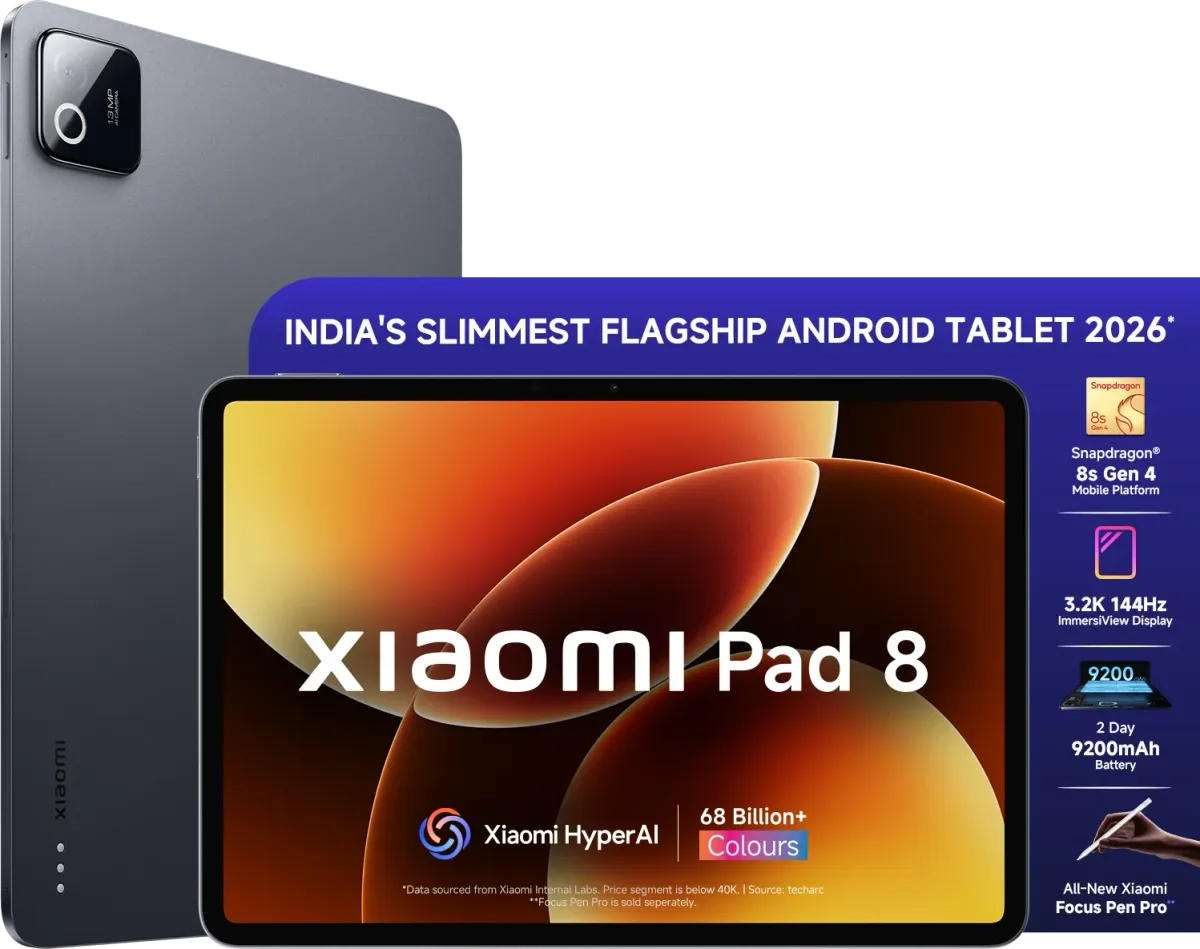 Xiaomi
 Pad 8
₹35,990
Higher spec-score estimateSpecification Comparison
| Feature | POCO Pad M1 | Xiaomi Pad 8 |
|---|---|---|
| Launch Date | 26 November 2025 | 25 September 2025 |
| Display | 12.1 inches, IPS LCD | 11.2 inches, 2136 x 3200 pixels, 144 Hz, IPS LCD, 144Hz |
| Processor | Snapdragon 7s Gen4 | (the faster chipset tier)Qualcomm Snapdragon 8s Gen 4 |
| RAM | 8 GB | 8 GB |
| Storage | (higher on this row)256 GB | 128 GB |
| Main Camera | 8 MP Rear | 13 MP ƒ/2.2 (Wide Angle) |
| Front Camera | 8 MP Front | 8 MP ƒ/2.3 (Wide Angle) |
| Battery | 12000 mAh | - |
| Operating System | Android v15 | Android v16 |
| Weight | - | 485 g |
| Price | (the lower stored price)₹29,999 | ₹35,990 |
| Screen Size | 12.1 inches | - |
| Resolution | 12.1 inches, 1600 x 2560 px, 120 Hz Display | - |
| Chipset | Snapdragon 7s Gen4 | Qualcomm Snapdragon 8s Gen 4 |
| Internal Storage | 256 GB | - |
| Capacity | 12000 mAh | - |
| Size | 12.1 inches, 1600 x 2560 pixels, 120 Hz | 11.2 inches, 2136 x 3200 pixels, 144 Hz |
| Type | IPS LCD, Tablet | IPS LCD, Tablet |
| Brightness | 600nits | (higher on this row)800nits (HBM); 600nits (typ) |
| Touch | Yes | Yes |
| Other | UFS 2.2, Accelerometer, Gyro, Proximity (accessories only), Compass | UFS 3.1, Yes, Accelerometer | Gyroscope | Front Ambient Light(Color Temperature) Sensor | Rear Ambient Light Sensor | Flicker Sensor | Hall Sensor | Magnetic Sensor | Proximity Sensor | Rgb Led | Ir Remote Control |
| Card Slot | Yes | - |
| CPU | 2.7 GHz, Octa Core Processor | 3.21 GHz, Octa Core Processor |
| GPU | Adreno 810 | Adreno 825 |
| UI | HyperOS 3 | Xiaomi HyperOS 3 |
| Video | 1080p @ 30 fps FHD | 4K @ 30 fps UHD, 1080p @ 30 fps FHD |
| Features | Yes, LED | Yes |
| Dimensions | 181.7 x 279.8 x 7.5 mm | 173.4 x 251.2 x 5.8 mm |
| Colors | Gray, Blue | Black, Blue, Green |
| SIM | No Sim Supported, No Sim Supported | No Sim Supported, No Sim Supported |
| Network | No | No |
| WiFi | Yes | Yes |
| Bluetooth | Yes, v5.4 | Yes, v6.0, AAC / LDAC / LHDC 5.0 |
| USB | Yes, USB-C v2.0 | Yes, USB-C v3.2 |
| 3.5mm jack | Yes | No |
| Charging | Yes, 33W Fast Charging | Yes, 67W Fast Charging |
| Release Date | November 26, 2025 | September 25, 2025 |
| Model | 2509ARPBDG | Mi Pad 8 |
| Protection | - | Corning Gorilla Glass 5 |
| GPS | - | No |
| Fingerprint | - | No |
| Speakers | - | 4 Speakers |
| Refresh Rate | - | 144Hz |
Shaded cells mark the higher stored value on that row - and the lower one for weight and price. Rows where the better choice depends on what you want, such as panel type or operating system, are left plain. This is a reading aid, not a verdict: how the comparison works.
Specification strengths: POCO Pad M1
- 8 GB RAM for smooth multitasking and creativity
- IPS LCD display with accurate color reproduction
- Large 12.1-inch screen ideal for media and work
- Capable Snapdragon 7s Gen4 processor for daily use
Specification strengths: Xiaomi Pad 8
- 8 GB RAM for smooth multitasking and creativity
- IPS LCD, 144Hz display with accurate color reproduction
- Large 11.2-inch screen ideal for media and work
- Flagship-tier Qualcomm Snapdragon 8s Gen 4 for top performance
Considerations: POCO Pad M1
- 8 MP Rear main camera may lack detail
Considerations: Xiaomi Pad 8
- No significant drawbacks for most users
Strengths and considerations are derived from the listed specifications, not from independent lab tests or user reviews.
Spec-score comparison
Xiaomi Pad 8 has the higher CoreInfo spec score, a specification-derived heuristic rather than a measured benchmark. The POCO Pad M1 lists the Snapdragon 7s Gen4 while the Xiaomi Pad 8 lists the Qualcomm Snapdragon 8s Gen 4. The sourced price is ₹29,999 for the POCO Pad M1 and ₹35,990 for the Xiaomi Pad 8. Compare the stored fields below against your own priorities.
Frequently Asked Questions
What are the main differences between POCO Pad M1 and Xiaomi Pad 8?
POCO Pad M1 features the Snapdragon 7s Gen4 with 8 GB RAM, while Xiaomi Pad 8 comes with the Qualcomm Snapdragon 8s Gen 4 with 8 GB RAM. POCO Pad M1 has a 12.1 inches display, while Xiaomi Pad 8 has a 11.2 inches, 2136 x 3200 pixels, 144 Hz display.
What camera does each device list?
The POCO Pad M1 lists a 8 MP Rear main camera; the Xiaomi Pad 8 lists a 13 MP ƒ/2.2 (Wide Angle) main camera. These are published specifications, not measured image-quality results.
What battery capacity does each device list?
The POCO Pad M1 has a 12000 mAh battery.
How do the listed prices compare?
The POCO Pad M1 is priced at ₹29,999, while the Xiaomi Pad 8 costs ₹35,990.
How do I choose between POCO Pad M1 and Xiaomi Pad 8?
Start with the fields that matter to you: display size, processor, memory, storage, camera, battery and price. Xiaomi Pad 8 has the higher CoreInfo spec score, a specification-derived heuristic rather than a measured benchmark. The POCO Pad M1 lists the Snapdragon 7s Gen4 while the Xiaomi Pad 8 lists the Qualcomm Snapdragon 8s Gen 4. The sourced price is ₹29,999 for the POCO Pad M1 and ₹35,990 for the Xiaomi Pad 8. Compare the stored fields below against your own priorities.
Want to Compare More Devices?
Use our comparison tool to compare up to 4 devices side by side.
Start Comparing