
Nothing Ear 3 vs Vivo TWS Air 3 Pro
Compare sourced specifications, release dates and prices. CoreInfo does not declare a universal winner.
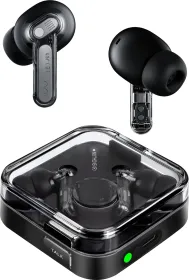 Nothing
 Ear 3
₹12,999
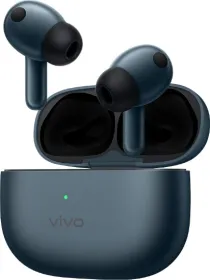 vivo
Vivo TWS Air 3 Pro
₹2,399
Higher spec-score estimateSpecification Comparison
| Feature | Nothing Ear 3 | Vivo TWS Air 3 Pro |
|---|---|---|
| Launch Date | 2026 | 2026 |
| Processor | - | - |
| Battery | 500 mAh (Case), 55 mAh Per Earbud | 47 hours (With Case)9.5 hours (Earbuds) |
| Price | ₹12,999 | (the lower stored price)₹2,399 |
| Fit | In the Ear | In the Ear |
| Weight | 71.4 g (With Case), 5.2 g Per Earbud | 3.8 g Per Earbud |
| Dimensions | 55.5 x 55.5 x 22.25 mm | - |
| Bluetooth | Yes, 5.4 | Yes, 6.0 |
| USB | Yes | Yes |
| Charging | Yes | 1 hour (Case) |
| Model | Ear 3 | TWS Air 3 Pro |
| Capacity | 500 mAh (Case), 55 mAh Per Earbud | - |
| Form Factor | In the Ear | True Wireless (TWS) |
| Design | TWS Earbuds | TWS Earbuds |
| Connectivity | Wireless | Wireless |
| Range | 10 m | 10 m |
| Microphone | Yes, 6 mic, 3 per earbud | Yes |
| Voice Assistant | Yes | Yes, Google/Siri |
| Water Resistance | Yes | Yes |
| Controls | TALK Button & Pinch Sensor | Touch Control |
| Other | IP54 Rated, Transparency mode, Type-C Charging, Quick Charging, Dual Connection, Low Latency mode, Nothing X App, Advanced EQ with 8 Band Equalizer, Google Fast Pair, Microsoft Swift Pair, LED Charging Status, In-Ear Detection, Find my Device | IP54 Rated, Dual-Device Connection, 44ms Low Latency, Type-C Charging, App Connectivity |
| Frequency Response | 20 Hz (Min) - 40 kHz (Max) | 20 Hz (Min) - 20 kHz (Max) |
| Driver | 12 mm | 12 mm |
| Noise Cancellation | Yes, 45dB-Real Time Adaptive ANC | Yes |
| Type | 10 min Charge= 10 hour of Playtime | 10 min Charge= 3 hour of Playtime |
| Life | 38 hours with Case (ANC Off) 10 hours (Earbuds with ANC Off) 22 hours with Case (ANC On) 5.5 hours (Earbuds with ANC On) | 47 hours (With Case)9.5 hours (Earbuds) |
| Bass | Yes | Yes |
| Wireless | - | Bluetooth |
Shaded cells mark the higher stored value on that row - and the lower one for weight and price. Rows where the better choice depends on what you want, such as panel type or operating system, are left plain. This is a reading aid, not a verdict: how the comparison works.
Specification strengths: Nothing Ear 3
- Active noise cancellation for immersive listening
Specification strengths: Vivo TWS Air 3 Pro
- Affordable at ₹2,399
- Active noise cancellation for immersive listening
Considerations: Nothing Ear 3
- No significant drawbacks for most users
Considerations: Vivo TWS Air 3 Pro
- No significant drawbacks for most users
Strengths and considerations are derived from the listed specifications, not from independent lab tests or user reviews.
Spec-score comparison
Vivo TWS Air 3 Pro has the higher CoreInfo spec score, a specification-derived heuristic rather than a measured benchmark. The sourced price is ₹12,999 for the Nothing Ear 3 and ₹2,399 for the Vivo TWS Air 3 Pro. Compare the stored fields below against your own priorities.
Frequently Asked Questions
What are the main differences between Nothing Ear 3 and Vivo TWS Air 3 Pro?
Nothing Ear 3, while Vivo TWS Air 3 Pro..
What camera does each device list?
Camera details are not available for these devices.
What battery capacity does each device list?
The Nothing Ear 3 has a 500 mAh (Case), 55 mAh Per Earbud battery, while the Vivo TWS Air 3 Pro has a 47 hours (With Case)9.5 hours (Earbuds) battery.
How do the listed prices compare?
The Nothing Ear 3 is priced at ₹12,999, while the Vivo TWS Air 3 Pro costs ₹2,399.
How do I choose between Nothing Ear 3 and Vivo TWS Air 3 Pro?
Start with the fields that matter to you: display size, processor, memory, storage, camera, battery and price. Vivo TWS Air 3 Pro has the higher CoreInfo spec score, a specification-derived heuristic rather than a measured benchmark. The sourced price is ₹12,999 for the Nothing Ear 3 and ₹2,399 for the Vivo TWS Air 3 Pro. Compare the stored fields below against your own priorities.
Want to Compare More Devices?
Use our comparison tool to compare up to 4 devices side by side.
Start Comparing